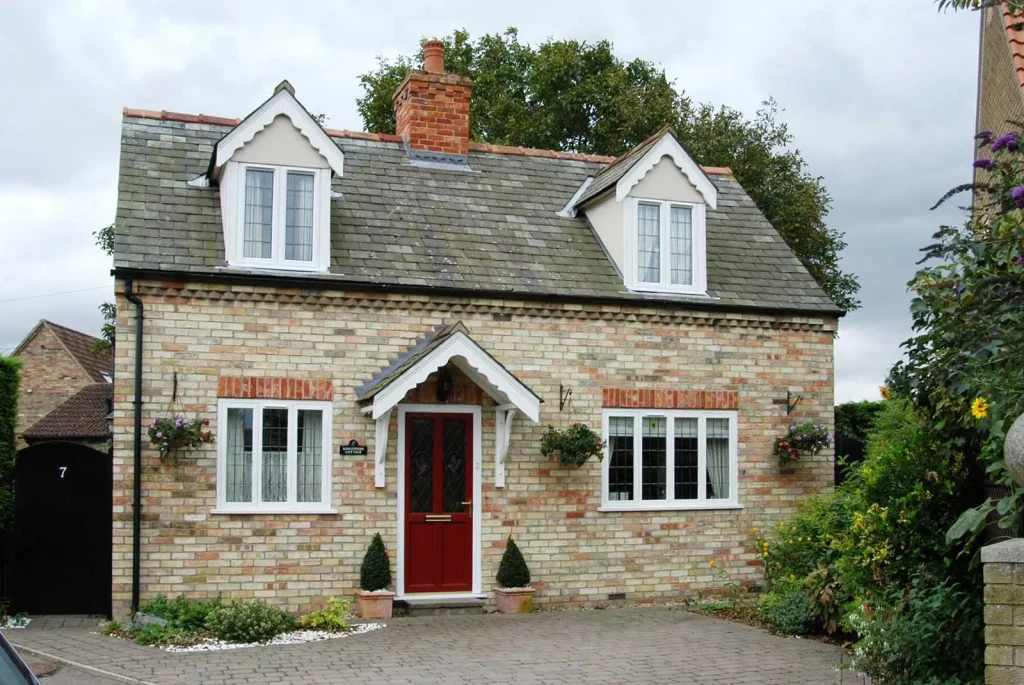
- 10 Dec 2025|
- News
If your property is becoming drafty, bills are soaring, and your home’s exterior needs a refresh, a new front door can go a long way to solving these issues.
The good news is that the market is full of appropriate replacements, from affordable uPVC to sleek aluminium – but composite doors especially are proving to be the perfect home entrance as we enter 2026.
Composite door features take the best parts of different types of doors and combine them in one clever design. Most modern composite doors have a dense polyurethane foam core for excellent insulation, a reinforced structure for strength, tough GRP skins (Glass Reinforced Plastic initially developed to withstand harsh marine conditions) for weather resistance, and multi-point locking for high security.
These doors also mimic the look of traditional wooden doors, thanks to realistic woodgrain finishes, while offering the kind of thermal performance that helps keep energy bills down. Below, we’ll walk you through the key features to look out for, the benefits you can expect and the options available for your home.
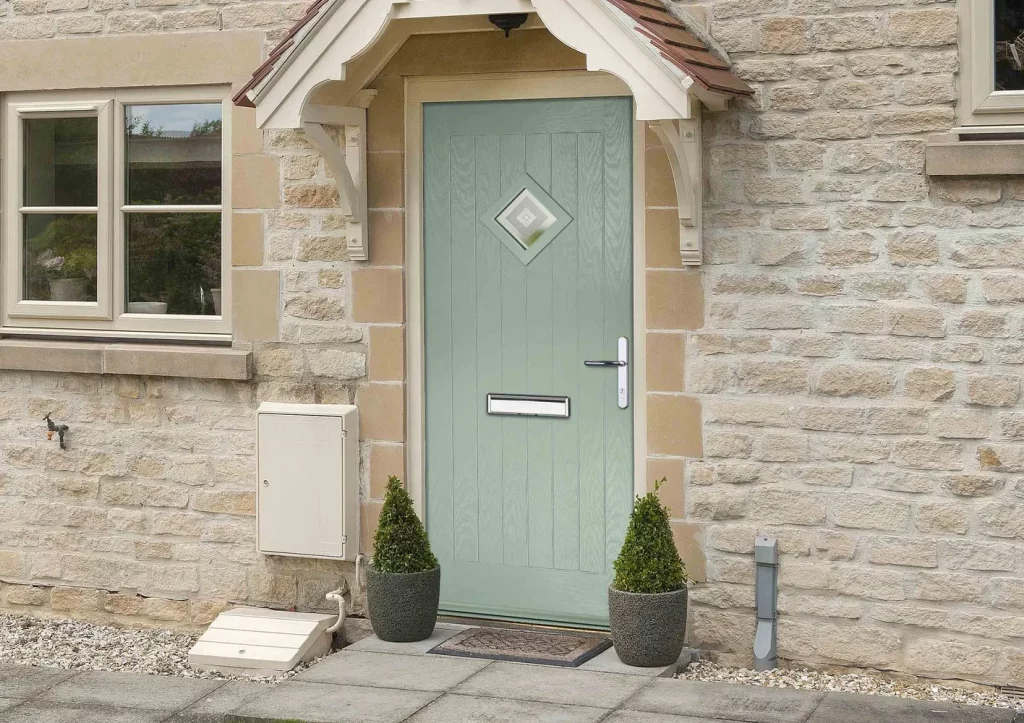
Outlining composite door features
A composite door is made to provide strength, insulation and reliable weather resistance. Here are the composite door features that matter most.
Foam core
Most high quality composite doors use a dense polyurethane foam core. This lightweight core traps heat to reduce heat loss, helping maintain a comfortable temperature year-round. A foam core is more thermally efficient than a solid timber core, which is why it’s such a popular choice for busy homeowners looking to cut running costs and shrink their carbon footprint.
GRP outer skin
The outer skin of the door is a tough GRP layer. GRP is a weather-resistant material used in boatbuilding, so it copes impressively with harsh weather conditions. It won’t warp, crack or fade like timber doors, and only needs a quick wipe with a damp cloth to stay looking fresh.
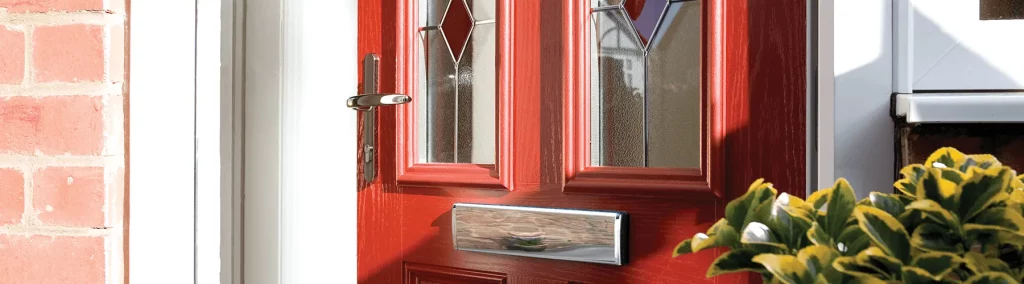
Decorative glass
Your glazing isn’t just there for looks. High-quality double-glazing units help improve energy efficiency and noise reduction, which is handy if you live on a main road. Many designs include laminated or toughened glass for extra security.
Reinforced core
Alongside the foam core, many doors incorporate reinforced sections for strength. Distinction Doors, for example, add laminated veneer timber elements to create rigidity, giving you confidence that your new composite door will resist force and stay secure.
Water-resistant components
Composite doors use moisture-resistant layers throughout the door frame and core structure. This prevents swelling and ensures consistent performance in changing weather conditions. For homeowners who’ve dealt with swollen timber doors, this is a welcome upgrade.
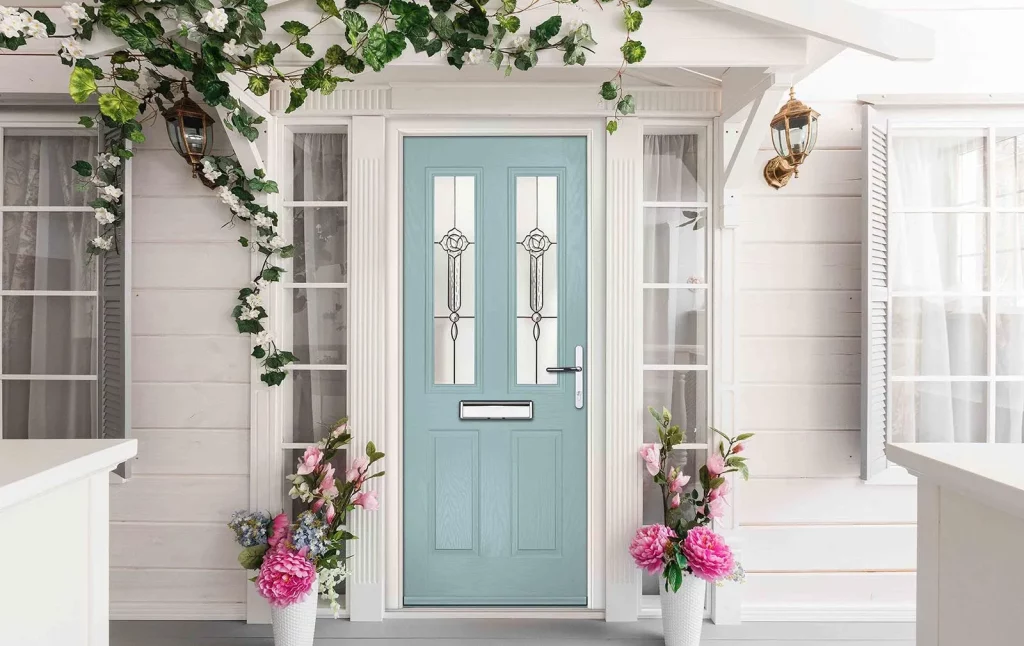
What are the benefits of composite doors?
Composite doors come with a range of benefits that make them the perfect choice for modern homes.
Thermal efficiency
A composite door offers excellent insulation, reducing heat loss through your entranceway. According to industry testing, composite doors can be up to 17 percent more energy efficient than traditional timber panel doors, helping control heating costs.
Low maintenance
Unlike timber, composite doors don’t need sanding, painting or varnishing. A wipe with warm, soapy water is all they need to stay clean.
Durability
Thanks to their reinforced cores and GRP skins, composite doors resist fading, cracking and warping. This long lifespan makes them a great investment for any property.
Style and kerb appeal
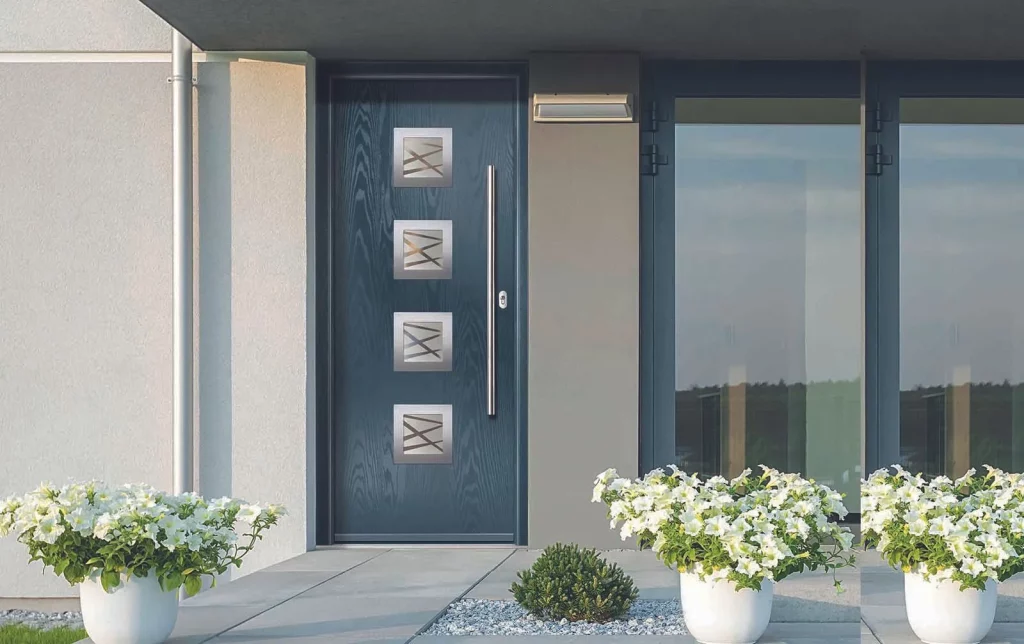
With a range of styles, a range of colours and woodgrain finishes, composite front doors suit both classic cottages and modern homes. Whether you prefer anthracite grey, chartwell green, red or oak tones, there’s something for every taste.
Security
Composite doors include multi-point locking systems, strong cores and secure glazing. This provides valuable peace of mind that your entrance is built to keep your home safe.
FAQ
What is the life expectancy of a composite door?
Most composite doors last around 30 years due to their durable construction, GRP skins and stable core. With simple maintenance and regular hardware checks, they offer long term reliability.
Is a composite door better than a uPVC door?
Composite doors offer better insulation, improved security and a more traditional appearance. A uPVC door is still a reliable option however.
Do composite doors fade in sunlight?
High quality composite doors use colour-stable skins designed to resist UV exposure. This means your colour stays true, even in bright conditions.
Can I use a composite door as a back door?
Absolutely. Their strength and insulation make them suitable for both a new front door and a back door, especially in areas exposed to strong winds or rain.
Composite doors from Doncaster Trade Windows
At Doncaster Trade Windows, we supply and install a wide selection of composite front doors and stable doors from trusted names like DoorCo and Distinction Doors. With a wide range of colours, glazing choices and hardware options, you can create the perfect door for your home. Our customer service team can talk you through choices such as black, blue, red, oak, anthracite grey and many more.
Who are Doncaster Trade Windows?
We’ve been supporting homeowners and trade professionals across South Yorkshire since 2013 with high quality windows, doors and conservatories. From our Doncaster manufacturing facility, we deliver reliable products, fair pricing and impressively fast lead times.
Our team works within roughly a 20 mile radius of Doncaster and we’re proud to hold Certass and Thermal Rating Register accreditations.
If you’re ready to find the perfect door for your home or want to compare composite door styles in person, visit our showroom or get in touch on 01302 891426 or doncastertradewindows@live.co.uk. You can also reach us through our online contact form. We’re here to help you make the right choice for your next project.